In commercial construction and export procurement, true fiber cement (fibre cement) cost per m² cannot be read from a static retail single-sheet price list. SerFibro supplies strictly on a full-pallet, truckload, 20-foot container, and turnkey corporate project basis—where landed m² cost is governed by six interconnected variables: board thickness and pallet density, factory surface technology (raw, primed, ColorBoard or SerFibro Lam), sheet format nesting yield, ventilated rainscreen sub-framing (SerProfil galvanized steel vs. aluminium), payload-optimized logistics, and whether turnkey installation by CFY Engineering & Architecture is included.
General contractors, facade fabricators, modular building manufacturers, and international distributors frequently encounter misleading per-sheet retail figures online that ignore industrial packaging, autoclave batch scheduling, and heavy mineral freight mechanics. SerFibro focuses exclusively on B2B wholesale supply—delivering factory-strapped full pallets, full road curtainsiders, 20-foot heavy sea containers, and engineered facade packages rather than loose single sheets for small DIY repairs.
A static online price per square metre inevitably distorts commercial tenders: it either builds in high retail handling margins that penalize a 3,000 m² commercial elevation, or quotes a bare ex-works utility board that omits edge trimming, protective interleaving film, and payload-matched freight. Project-specific costing aligns exact TS EN 12467 board specification directly with production lot efficiency and transport weight capacity.
B2B wholesale structure: full factory pallets, full truckloads (FTL), 20' DC containers, and corporate facade contracts.
Eliminates loose-sheet breakages, retail markups, and batch-to-batch shade variations across large elevations.
Transparent line-item separation between ex-works/FCA board supply, sub-framing hardware, and freight.
02Cost Driver 1 & 2: Board Thickness Mass (6–20 mm) and Surface Technology vs. Lifecycle Painting CAPEX
Raw autoclaved mineral mass scales almost linearly with thickness across 6 mm, 8 mm, 10 mm, 12 mm, and heavy 14–20 mm architectural boards, shifting two commercial metrics simultaneously: the factory board index per m² rises while the number of sheets packed per pallet and per 24–26 tonne vehicle drops. Selecting 8 mm or 10 mm for standard ventilated facades—reserving 12 mm for wide fixing spans, Type 01–05 CNC-grooved profiles, or ground-floor impact zones—optimizes both material outlay and freight cost per m².
Equally decisive is surface delivery state across Unprimed Natural grey, Factory Pre-Primed, Through-Coloured ColorBoard (SF-CB-*), and UV/PET-film laminated SerFibro Lam interiors. While natural grey fibre cement carries the lowest initial board index, site-painting an exterior facade requires prolonged scaffolding rental, weather-dependent alkali primer plus two exterior acrylic topcoats, site labour, and recurring repainting CAPEX every 7 to 10 years. Specifying hydrophobic mass-pigmented ColorBoard raises the initial panel index moderately but eliminates wet site painting entirely, delivering a lower installed Day-1 facade cost and dramatically lower 25-year lifecycle expenditure.
10 mm sheet weighs ~3.125 × thickness × density (~40–45 kg/board), directly governing m² loaded per truck or container.
Through-coloured ColorBoard removes site primer, 2× acrylic paint coats, masking labour, and extra scaffolding weeks.
Interior SerFibro Lam replaces wet ceramic tiling and site painting in hospital, hotel, and modular wet/dry partitions.
03Cost Driver 3: Sheet Format Nesting (2500 / 2800 / 3000 mm), Lap Overlaps & Linear Jambs
Purchasing the cheapest square metre of gross board becomes expensive if the chosen sheet length clashes with floor-to-floor modulation. Matching storey heights and window band modules across 1250 × 2500 mm (3.125 m²), 1250 × 2800 mm (3.50 m²), or 1250 × 3000 mm (3.75 m²) routinely trims offcut waste from 18–22% down to 7–10%. On a 4,000 m² net elevation, saving 10% waste eliminates roughly 400 m² of unnecessary panel purchase, cutting labour, and site disposal.
Estimators must also account for geometry-specific coverage rules: horizontal SF-SIDING lap planks require a 25–30 mm weather overlap between courses, meaning 1.00 m² of net facade requires approximately 1.15–1.22 m² of gross plank area before window offcuts. Meanwhile, heavy 20 mm solid mineral window jambs (SF-JAMB) and decorative cornices (SF-CORNICE) are costed per linear metre (mtül / lm) according to strip width rather than flat wall area.
Standard sheet areas: 2500 mm = 3.125 m² | 2800 mm = 3.50 m² | 3000 mm = 3.75 m² per full board.
In an engineered ventilated rainscreen facade, the fiber cement cladding board itself typically represents only 35% to 50% of the total installed wall budget. The remaining system bill of materials (BOM) comprises structural wall brackets (L-consoles with thermal-break pads), vertical carrier rails, EN 13162 Class A1 non-combustible stone wool insulation, UV-stabilized vapour-permeable breather membrane, vertical EPDM joint gaskets, perforated ventilation profiles, and stainless/riveted fixings.
Sub-framing material choice creates a major commercial lever: specifying high-tensile galvanized steel M, J, and C rainscreen profiles from our group manufacturing line SerProfil cuts sub-structure cost substantially compared to heavy extruded aluminium T/L systems on low-to-mid-rise concrete, masonry, and light-steel buildings while preserving non-combustible Class A1 integrity. For developers in Türkiye and select regional contracts seeking single-point accountability, parent group CFY Engineering & Architecture delivers full modulation engineering, SerProfil sub-framing supply, and certified turnkey site installation.
SerProfil galvanized steel M/J/C profiles offer high structural economy vs. extruded aluminium T/L rails.
Composite ready-wall SF-PANEL (60–100 mm EPS/rockwool core) unifies inner wall, insulation, and outer skin in modular builds.
Turnkey design-supply-install contracts executed by parent engineering group CFY Engineering & Architecture.
Because autoclaved fibre cement has an apparent density of ~1,300–1,450 kg/m³, transport hits maximum legal payload weight (typically 24–26.5 tonnes on European road curtainsiders and heavy-rated 20' DC sea containers from Ambarli/Istanbul, Gebze, or Izmir ports) while occupying less than 40% of the internal container or trailer height. Shipping half-loaded trucks or partial LCL pallets inflates freight cost per m² by two to three times.
Smart B2B procurement exploits this physical weight-to-volume gap: once a truck or 20' container reaches ~22–24 tonnes of dense fiber cement pallets on the floor deck, the generous empty upper cubic volume can be top-stowed with lightweight, high-volume facade components—such as SerProfil galvanized profiles, aluminium brackets, breather membrane rolls, and low-density mineral wool packs—reducing the marginal transport cost of your sub-structure and insulation close to zero.
20' DC container carries nearly the same net payload tonnage as a 40' container at substantially lower ocean freight.
Combine floor-stowed dense boards with top-stowed lightweight SerProfil rails and membranes in one dispatch.
Confirm jobsite forklift capacity (e.g., 2.0 t vs. 3.0 t) beforehand so pallet gross weight matches unloading gear.
06Cost Driver 6: 5-Minute BOQ Checklist for a Same-Day Itemized B2B Quotation
To eliminate guesswork and contingency padding from your tender budget, submit a concise project schedule rather than asking for an open-ended generic m² rate. Sharing exact SKU series, thickness, sheet dimensions, ordered board quantity (or net architectural wall area), delivery city/port with preferred Incoterm (EXW, FCA, FOB, CIF, or DAP), and whether sub-framing or installation is requested allows our engineering desk to calculate optimal pallet counts and vehicle loads immediately.
Structured commercial enquiries sent via our online Quote Form (direct WhatsApp dispatch to +90 505 507 04 18) or emailed with Excel/PDF schedules to [email protected] receive a clear, line-itemized written quotation separating board unit cost, palletization, optional SerProfil rainscreen accessories, logistics, and—where applicable—turnkey execution by CFY Engineering & Architecture.
Include SKU/surface state, mm format × thickness, sheet count (or net m²), destination/Incoterm, and target month.
Request side-by-side comparison options (e.g., Primed + Site Paint vs. Through-Coloured ColorBoard) if needed.
Fast B2B quotation desk: WhatsApp +90 505 507 04 18 or email [email protected].
Relative B2B Board Cost Index vs. Total Installed Facade Lifecycle Matrix (Non-Currency Engineering Reference)
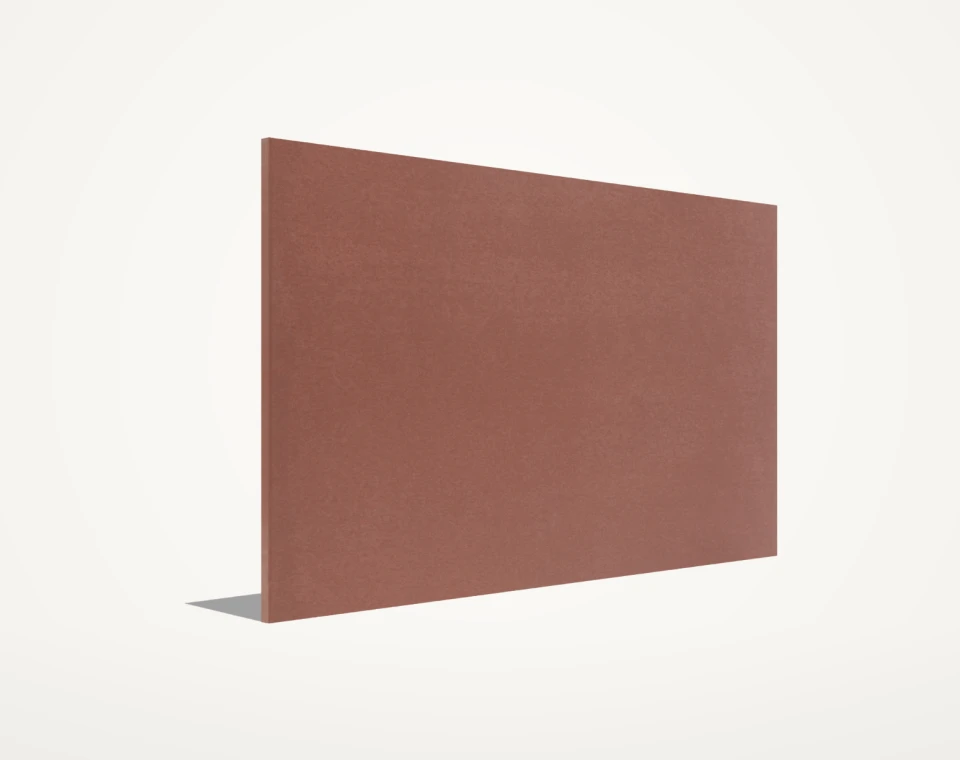
Autoclaved 1250 × 2500 × 10 mm mass-pigmented flat facade board (EN 12467+A2 Cat. A, Class A1, RL ≥ 0.75) requiring zero site painting across 7 core shades and 5 solution topcoats.
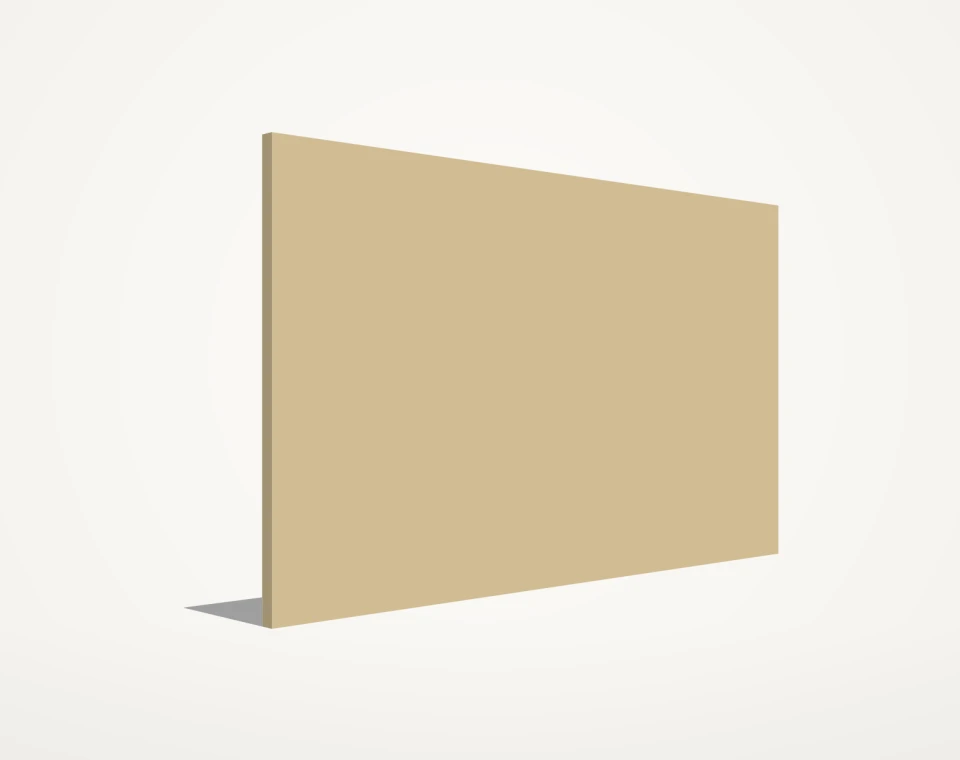
Weather-engineered EN 12467 Category A autoclaved exterior facade board with low thermal expansion (αt = 0.005 mm/mK), freeze-thaw durability and Class A1 fire safety across 16 variants.
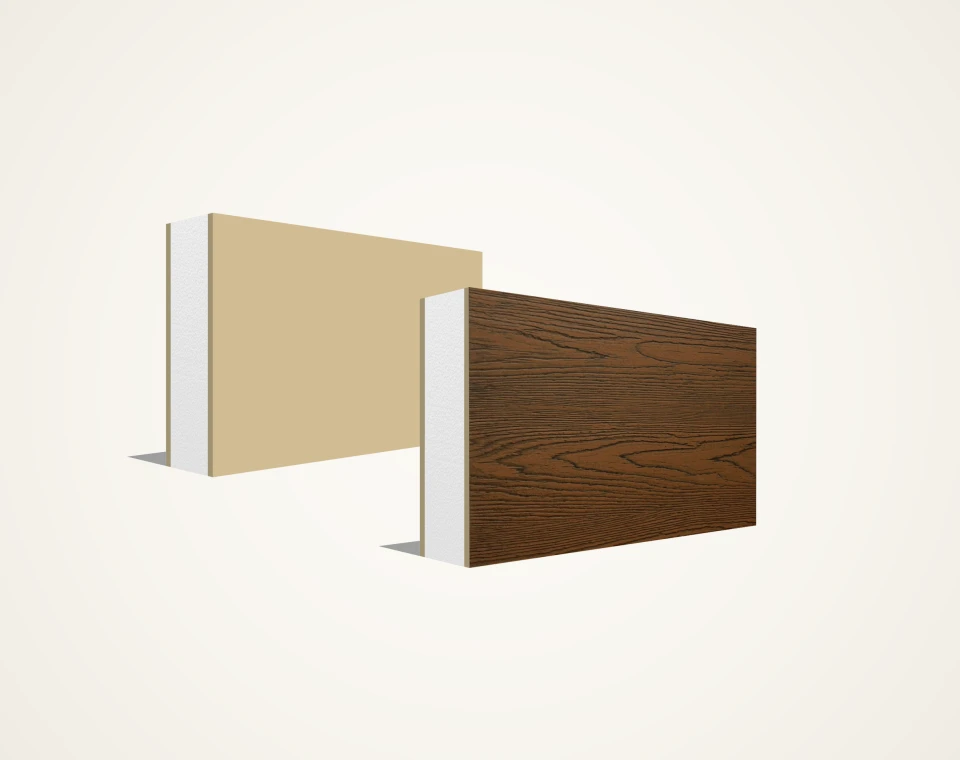
Three-layer ready-made wall panels combining 8 + 8 mm autoclaved Class A1 fibre cement skins with a 16 DNS EPS thermal core across 60, 80 and 100 mm thicknesses in smooth and 5 embossed reliefs.
Frequently Asked Technical & Commercial Questions
Does SerFibro sell single retail fiber cement sheets, or only wholesale pallet and project quantities?
SerFibro operates strictly on a B2B commercial basis—supplying factory-strapped full pallets, full road truckloads, 20-foot export containers, and complete corporate facade packages rather than single loose DIY sheets.
Why can Through-Coloured ColorBoard cost less overall than cheaper natural grey boards painted on site?
Although ColorBoard has a higher ex-works board index, it completely eliminates exterior site primer, two acrylic paint coats, painter labour, weather delays, weeks of extra facade scaffolding rental, and 7–10 year repainting cycles.
How do I convert net architectural wall m² into ordered fiber cement sheet count accurately?
Add 8–15% cutting waste for flat rainscreen modulation (or 18–25% total allowance for horizontal lap siding including the 25–30 mm course overlap), divide by the single sheet area (3.125 m², 3.50 m², or 3.75 m²), and round to full export pallets.
Can SerFibro supply galvanized steel sub-framing profiles and stone wool in the same truck or 20' container?
Yes. Because dense fiber cement pallets reach payload limits using less than 40% of vehicle height, top-stowing lightweight SerProfil galvanized M/J/C rails, brackets, and membranes in the empty upper cube slashes accessory freight costs.
Do you offer turnkey facade engineering and site installation in addition to wholesale board supply?
Yes. While international buyers typically order palletized board or complete rainscreen material packages, corporate projects can contract full modulation design, SerProfil sub-framing, and certified site installation through CFY Engineering & Architecture.
Ready to Verify Formats, Finishes & Export Delivery Terms?
Share your target board thickness, outer dimensions, finish state, and destination port. Our commercial office prepares a product-matched quotation and sample dispatch plan.