Supply · Consultancy · Engineering · Application +90 505 507 04 18 [email protected]
Specification & Site Engineering Reference

Fibre Cement Technical Reference Center: Standards, Substructure & Handling

A consolidated engineering briefing for architects, facade consultants, and site managers—clarifying how EN 12467 and EN 13501-1 parameters are verified per variant and how ventilated facade durability depends on air cavity, open joints, and dry handling.

Fibre Cement Technical Reference Center: Standards, Substructure & Handling
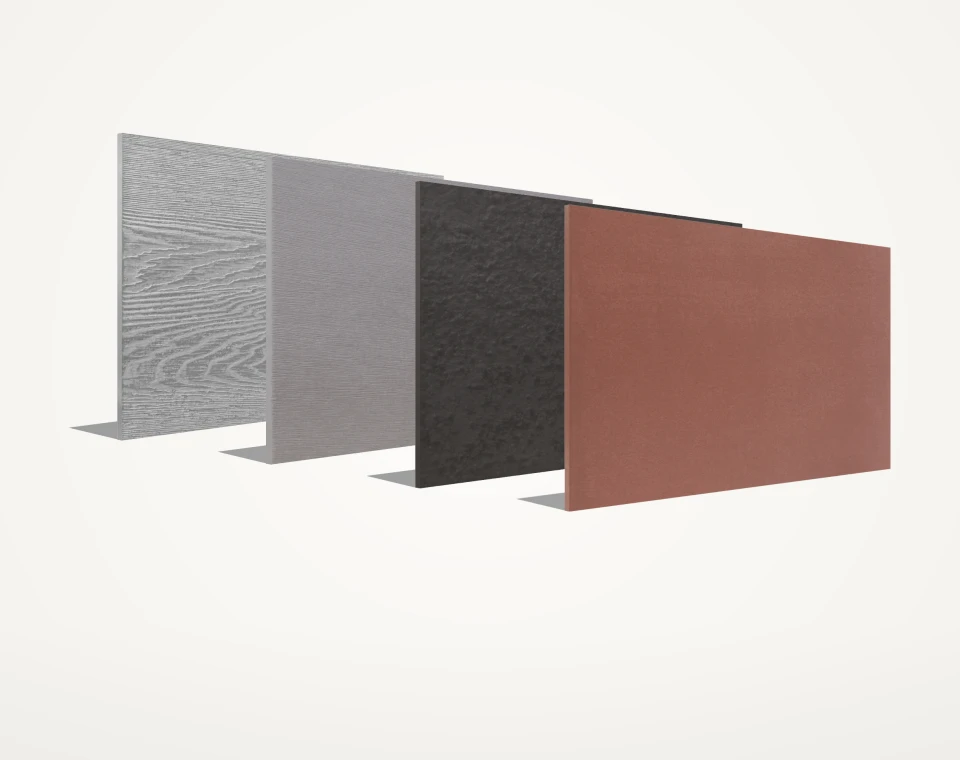
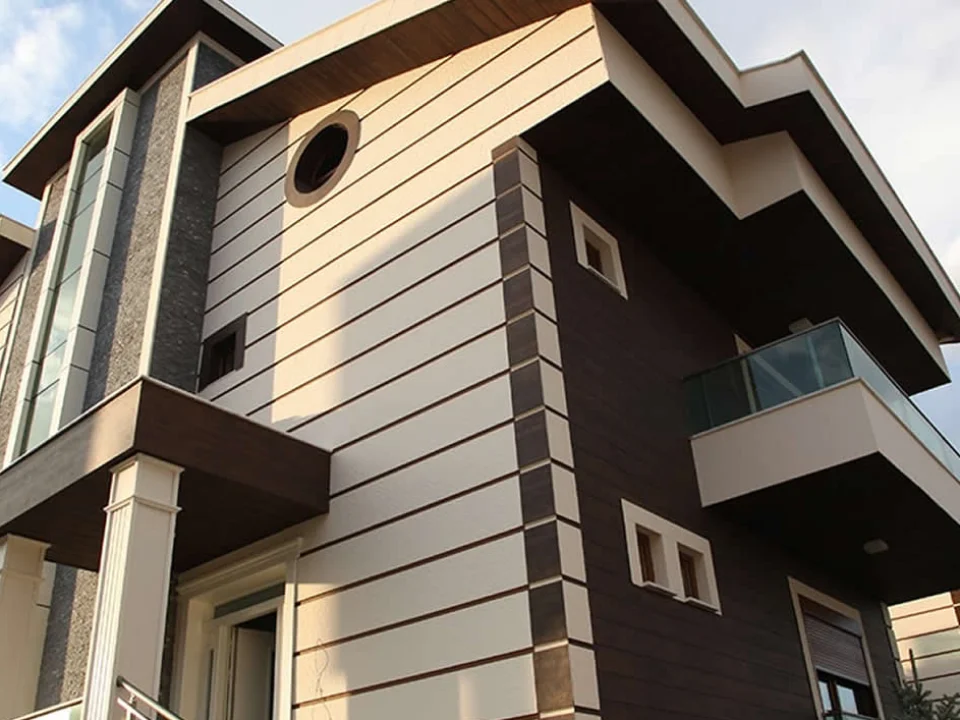
Representative surface & application visual — final shade, relief depth, and batch texture are verified via physical sample prior to order.

1. EN 12467 Exposure Categories & Mechanical Strength Classes

Flat fibre cement sheets intended for building envelopes are commonly specified under EN 12467. Category A covers boards subjected to direct weather, heat, rain, and freeze-thaw cycles; Category B covers semi-exposed external soffits/sheltered zones; Categories C and D apply to internal applications. Bending strength is ranked from Class 1 to Class 5 along with dimensional tolerance Levels I and II. Always state the required category in your enquiry so the matched datasheet confirms compliance.
2. Reaction to Fire (EN 13501-1) vs Complete Wall Fire Resistance

Mineral fibre cement substrates have inherently low organic content, but factory paint films, primers, or surface sealers contribute calorific load under EN 13501-1 testing. Consequently, SerFibro never issues blanket fire claims across the entire catalog; reaction-to-fire classification is confirmed strictly via the datasheet of the selected uncoated or coated series. Furthermore, single-board reaction-to-fire must never be confused with system fire resistance (such as EI 60 or EI 90), which depends on studs, mineral wool, fixings, and joint sealant.

3. Ventilated Rainscreen Air Cavity, EPDM Strips & Fixing Allowance

Exterior fibre cement panels perform best as ventilated rainscreens: maintain a continuous vertical rear ventilation cavity with unobstructed bottom intake and top exhaust vents, apply UV-stable EPDM joint strips behind vertical supporting profiles, respect open panel joints (typically 8–10 mm on exterior facades), and combine fixed points with sliding/oversized holes so panels accommodate hygrothermal movement without corner cracking.

4. Dust-Controlled Sawing, Edge Sealing & Dry Horizontal Storage

Cut boards dry using carbide-tipped or polycrystalline diamond (PCD) circular saw blades paired with HEPA dust extraction and operator FFP3 respiratory protection. Wipe cutting dust off both faces immediately—wet cement dust left on coated panels hardens into permanent pale stains. Seal cut edges where required by the system datasheet, and keep pallets flat under dry ventilated cover.

Engineering Pre-Check Matrix Before Issuing a Project Specification
Parameter Why It Matters How SerFibro Verifies It
Exposure Zone (Ext. / Semi-Ext. / Int.) Determines required EN 12467 category and hydrophobic/paint protection. Matched against candidate board series TDS prior to quote.
Substructure Span & Wind Load Governs board thickness (8 / 10 / 12 mm+) and edge fixing distances. Confirmed by project facade engineer using TDS mechanical values.
Finish State & Edge Appearance Distinguishes grey-core painted edges from through-coloured edges. Clarified via physical sample specimens before order confirmation.
Directional Relief / Sanding Arrow Prevents 90°/180° shade mismatch across adjacent panels. Noted on TX-* specification sheet and cutting plan checklist.

Structured B2B Quotation & Sample Request (Direct WhatsApp)

Compile single or multiple fibre cement product lines, thicknesses, formats, and destination details into a structured technical summary sent directly to our export desk on WhatsApp (+90 505 507 04 18). Zero server form queues.

Product Specification Lines

For multi-sheet CAD/PDF packages, you may also email: [email protected]

Related Fibre Cement Product Families

Frequently Asked Technical & Commercial Questions

Why are technical datasheets (TDS) and Declarations of Performance matched per product variant?

Physical density, bending strength class, moisture movement, and reaction-to-fire classification depend on the exact board formulation and factory coating build-up (e.g. uncoated mineral board vs multi-coat painted panel). Sharing variant-matched documents guarantees that your specification engineer reviews authentic test parameters.

How should EN 12467 durability categories and strength classes be checked during specification?

EN 12467 classifies flat fibre cement sheets by exposure category (A, B, C, D—where Category A targets external weather-exposed applications) and bending strength class (Classes 1 to 5). State your required exposure category and thickness in your enquiry so we match a compliant board series and supply its verified datasheet.

Does surface coating change the reaction-to-fire review of a fibre cement panel?

Yes. Under EN 13501-1, organic paint thickness and calorific value can differentiate an uncoated mineral substrate from a factory-coated panel, and board reaction-to-fire (e.g. A1 / A2-s1,d0 per datasheet) must never be confused with complete wall fire resistance (EI 30 / EI 60), which tests the entire wall assembly.

What is the difference between nominal outer sheet size and usable cut module area?

Nominal outer size describes the delivered rectangular sheet (e.g. 1250 × 2500 mm). When cutting architectural facade cassettes, perimeter edge squaring trims (often 10–15 mm per edge on raw boards), saw blade kerf (3–4 mm per cut), and directional grain constraints reduce net yield. Always verify whether your facade grid requires factory-squared edges.

What are the essential unloading and site storage rules upon delivery?

Unload pallets on level firm ground using wide-fork forklifts or spreader-bar slings that never crush board edges. Store pallets indoors or under ventilated dry cover; never leave shrink-wrapped pallets in direct rain/sun (condensation staining risk), and always carry individual sheets vertically on edge with two operators.

Ready to Verify Formats, Finishes & Export Delivery Terms?

Share your target board thickness, outer dimensions, finish state, and destination port. Our commercial office prepares a product-matched quotation and sample dispatch plan.

Request via WhatsApp Request Export Quote +90 505 507 04 18
WhatsApp Export & Supply Desk