Site Storage, Diamond-Blade Cutting, Edge Protection & Exterior Painting Guide for Fibre Cement
Durable exterior performance of autoclaved fibre cement starts before installation: store pallets flat under ventilated cover to prevent capillary efflorescence staining, carry sheets vertically on edge with two operatives, cut dry using polycrystalline diamond (PCD) blades with M-class extraction, brush off cement dust immediately, seal site-cut edges in wet exposures, and finish with alkali-resistant primer plus breathable 100% pure acrylic facade paint.
Inspect export pallets upon vehicle arrival for intact corner guards, dry stretch hoods and level timber bearers before signing transport documents. Store unopened pallets indoors in a dry, ventilated warehouse on a flat concrete floor; if temporary outdoor storage is unavoidable, keep factory hoods intact and add an elevated waterproof tarpaulin that permits cross-airflow without creating solar greenhouse condensation.
Never allow rainwater or ground splash to penetrate between horizontally stacked fibre cement sheets. Trapped capillary film between tightly pressed mineral faces dissolves trace calcium hydroxide from the cement matrix and draws it toward board edges during drying, reacting with atmospheric carbon dioxide to leave stubborn white carbonate efflorescence rings and differential shade marks.
Support boards on level bearers spaced no wider than 600–800 mm to prevent long-term flexural bow.
Retain factory interleaving sheets between coated, calibrated or through-coloured boards until installation.
If stacked boards accidentally get wet, separate them immediately and dry vertically on edge in shaded airflow.
When removing a board from an opened pallet, two operatives positioned at opposite ends should lift the top sheet straight upward rather than sliding it across the sheet underneath. Dragging mineral backs across architectural reliefs, factory primers or ColorBoard surfaces embeds abrasive silica grit into the face below and creates visible linear scuffing.
Immediately tilt the lifted board by 90 degrees onto its long edge and carry it vertically to the cutting bench or scaffold bay. Never carry full-size 2500 mm or 3000 mm fibre cement boards flat horizontally—mid-span self-weight sagging induces tensile micro-cracks or sudden brittle fracture across thinner 6 mm and 8 mm sheets.
Use clean cut-resistant grip gloves so skin oils and dirty handprints do not contaminate unprimed paintable faces.
Rest boards temporarily on timber battens or rubber pads—never drop raw corners directly onto concrete.
Use certified clamping frames or closed pallet cages when hoisting boards by crane onto upper facade levels.
03Dry Cutting with PCD Diamond Blades and Immediate Dust Removal
Always cut autoclaved fibre cement completely dry using a rail-guided plunge saw or bench panel saw equipped with a polycrystalline diamond (PCD) fibre cement blade (typically 4 to 6 PCD teeth) or continuous-rim diamond blade. Standard woodworking carbide blades dull within metres in quartz-rich mineral boards, while high-RPM dry angle grinders overheat edges and generate uncontrolled dust plumes.
Connect power saws directly to an M-class (or H-class) HEPA dust extractor and equip operators with FFP2/FFP3 masks. Crucially, wipe or vacuum dry cutting dust off both faces immediately after every cut: if alkaline cement-silica dust sits on the board and meets night dew or drizzle, it hydrates into an insoluble mineral haze that ruins paint adhesion and dark ColorBoard finishes.
Place boards face-down when cutting with hand-held circular saws, and face-up on stationary bench saws.
Lightly dress sharp sawn arrises at a 45° micro-chamfer using an 80–120 grit diamond sanding pad.
Never use wet-saw water cooling on raw boards, as dirty slurry stains porous cut zones and raises moisture.
04Drilling Fixing Holes and Sealing Site-Cut Edges in Wet Zones
Drill mechanical fixing holes strictly in rotary mode without hammer/percussion impact, using carbide-tipped masonry or sheet-metal/fibre-cement step drills while backing the board solidly near corners. On ventilated rainscreen facades, respect structural edge clearances and distinguish fixed dead-load anchor holes from oversized sliding-point holes that accommodate hygric and thermal sub-frame movement.
Whenever boards are trimmed on site for window reveals, parapet copings, splash plinths or coastal open-joint facades, raw sawn edges expose freshly opened capillary pores. Applying a hydrophobic siloxane edge impregnator or alkali-resistant acrylic edge sealer blocks lateral moisture wick-in, preventing dark wet-edge framing ("picture framing") and freeze-thaw edge spalling.
Blow or vacuum drill dust out of countersunk pockets before driving stainless screws or facade rivets.
Apply edge sealer with a clean foam roller or brush without dripping onto finished through-coloured faces.
Maintain minimum 8–10 mm open drainage/ventilation joints between adjacent exterior facade panels.
05Substrate Moisture Check, Alkali Primer and 100% Pure Acrylic Paint
Before site-painting unprimed natural grey boards, verify that the substrate is clean, dust-free and dry (equilibrium moisture below ~12–15%), and apply coatings only when ambient and board temperatures remain between +5 °C and +30 °C below 80% relative humidity. Because cementitious boards carry natural alkalinity (pH 10–12), raw surfaces must first receive a penetrating alkali-resistant acrylic or siloxane exterior primer.
Ordering factory Pre-Primed SerFibro Board variants (such as SF-SMOOTH-EXT, SF-WOOD or SF-SIDING) eliminates full-face site priming, stabilizes absorption uniformity and shortens scaffold cycles—requiring primer touch-up only on site-cut edges and filled screw heads. Finish exterior elevations with two uniform coats of vapour-permeable, UV-stable 100% pure acrylic (or silicone-modified acrylic) exterior facade paint.
Never paint under direct midday summer sun, high drying winds or ahead of overnight frost and rain.
Maintain consistent wet-film thickness across textured wood/stone grooves using airless spray + back-rolling.
Order sufficient paint from a single tinting batch per elevation to prevent subtle shade banding.
06Coating Pitfalls to Avoid: Non-Breathable Films and Dark Solar Gain
Never coat exterior fibre cement boards with solvent-borne alkyd enamels, oil-based house paints, rigid two-component epoxies, non-breathable polyurethane clear coats or low-binder interior vinyl emulsions. Residual alkaline pore moisture hydrolyzes oil/alkyd resins (saponification, turning the paint film sticky and peeling), while vapour-tight coatings trap moisture vapour behind the film until solar heat blisters the surface.
Pay close engineering attention to Light Reflectance Value (LRV) when architects specify charcoal, jet black or deep anthracite site paints (LRV < 20). Ultra-dark exterior coatings can push summer surface temperatures past +70 °C, magnifying thermal movement and sub-frame shear unless paired with IR-reflective cool pigments, EN 12467 Category A low-expansion substrates (SF-SMOOTH-EXT) or factory-engineered ColorBoard / pre-coated specifications coordinated with CFY Engineering & Architecture.
Avoid gypsum-based interior joint fillers or rigid exterior skim-coat plasters across ventilated board joints.
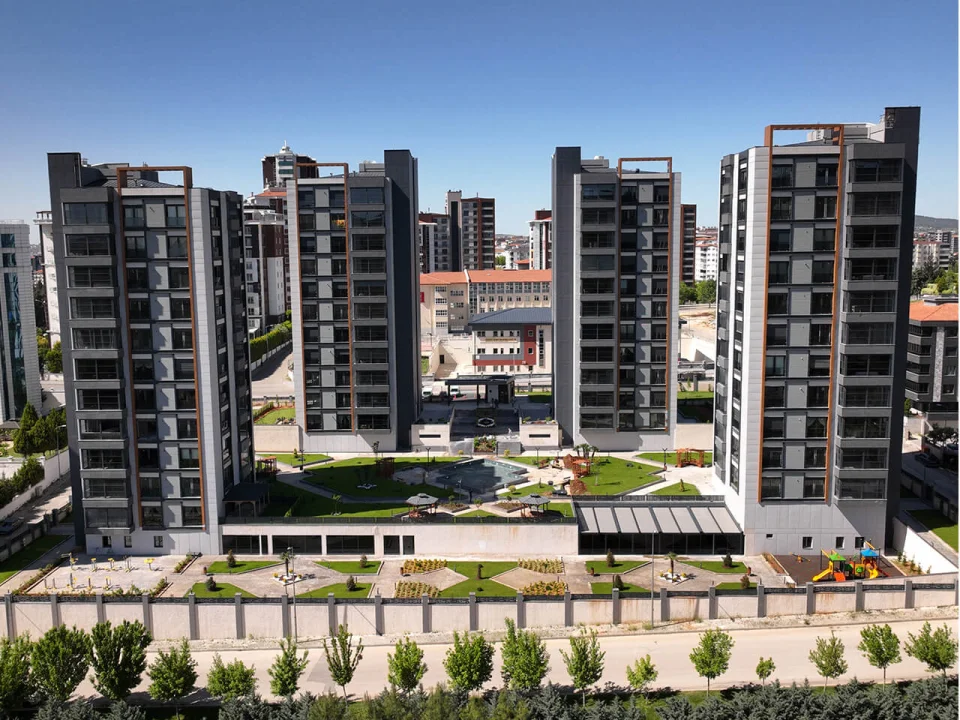
Weather-engineered EN 12467 Category A autoclaved exterior facade board with low thermal expansion (αt = 0.005 mm/mK), freeze-thaw durability and Class A1 fire safety across 16 variants.
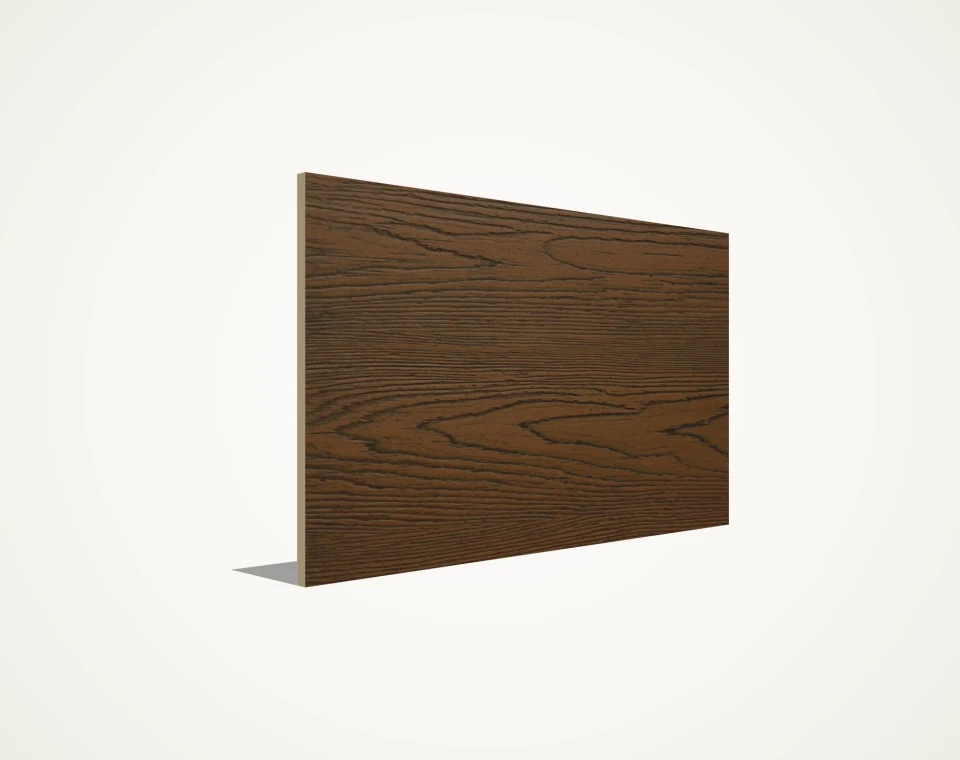
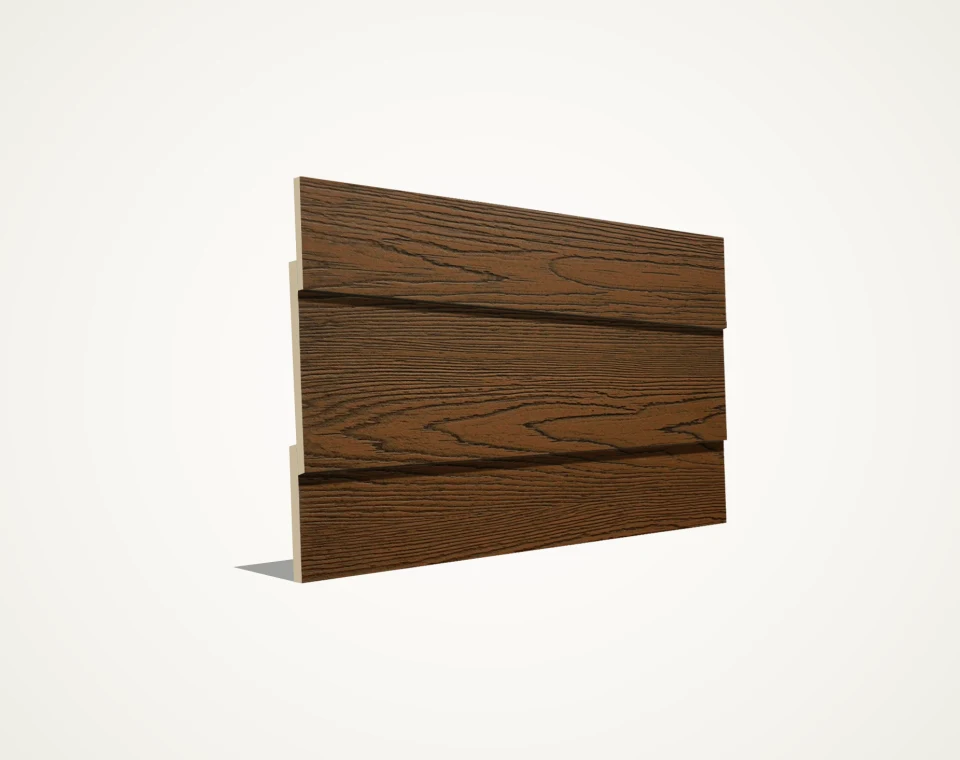
Weatherboard cladding planks (170 / 200 mm outer width, 8–10 mm) in wood-grain or smooth finishes for horizontal lap-joint facades and light-steel prefab homes.
Frequently Asked Technical & Commercial Questions
What happens if rainwater gets between stacked fibre cement boards on site?
Trapped moisture dissolves free lime inside the cement matrix and deposits white carbonate efflorescence stains as it dries. Separate wet sheets immediately and stand them vertically on edge in a shaded, ventilated area to dry evenly.
Can we cut fibre cement boards with a standard wood blade or dry angle grinder?
Standard carbide wood blades burn out rapidly against micronized quartz, while unshrouded angle grinders chip edges and release excessive fine dust. Use a rail-guided circular saw with a 4–6 tooth PCD diamond blade connected to an M-class dust extractor.
Do factory Pre-Primed SerFibro boards still need full priming on site?
No full-face priming is required if the factory primer remains clean and undamaged—simply dust off the face and apply two coats of 100% pure acrylic exterior paint, while touch-up priming any site-cut raw edges and sanded fastener spots.
Why do alkyd, oil or epoxy paints peel on exterior fibre cement facades?
Cement alkalinity chemically saponifies oil and alkyd binders, while vapour-impermeable epoxy or polyurethane films trap residual moisture vapour inside the mineral board until solar heating forces blisters and delamination.
Do through-coloured ColorBoard panels require exterior topcoat painting after cutting?
No. Through-coloured ColorBoard panels carry mineral pigment across their entire cross-section and factory hydrophobic protection; simply brush off dry saw dust immediately and apply clear edge impregnator on exposed cut edges where specified.
Ready to Verify Formats, Finishes & Export Delivery Terms?
Share your target board thickness, outer dimensions, finish state, and destination port. Our commercial office prepares a product-matched quotation and sample dispatch plan.