How to Evaluate Architectural Fibre Cement Facade Samples Before Specifying
Evaluate architectural fibre cement samples using a six-step physical protocol rather than digital renders: inspect hand samples vertically outdoors under direct, overcast and grazing daylight; compare cut-edge core colour against the face; account for full-sheet tonal scale; check rear-face sealing and water-droplet drying; verify cleanability alongside adjacent facade materials; and record exact SF-* and TX-* codes with matching TDS files.
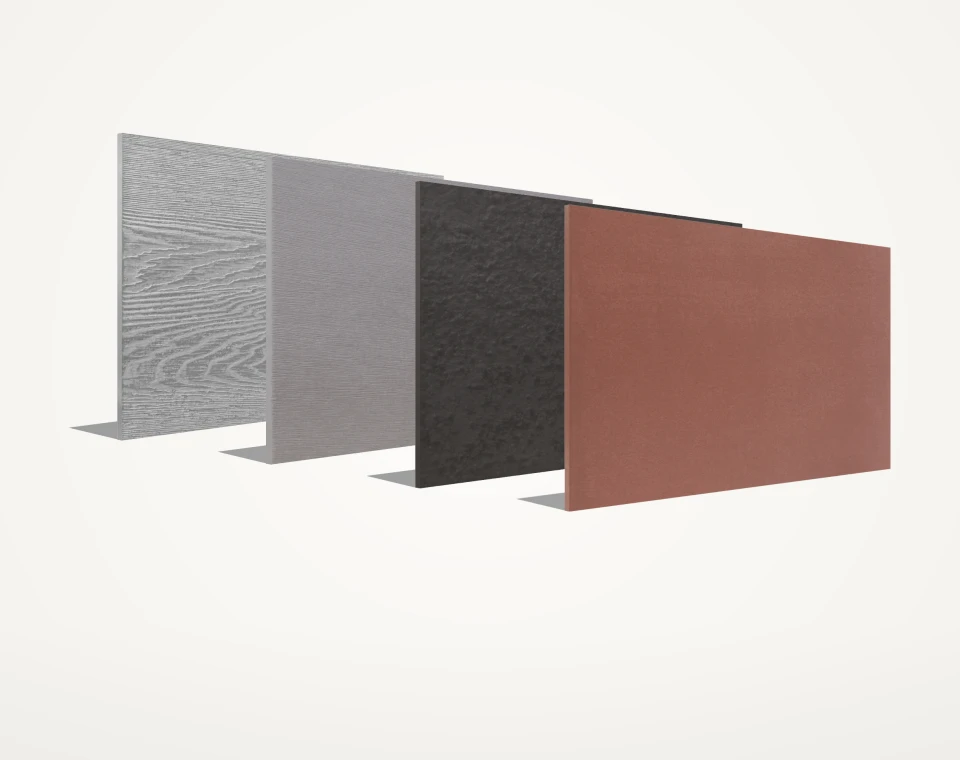
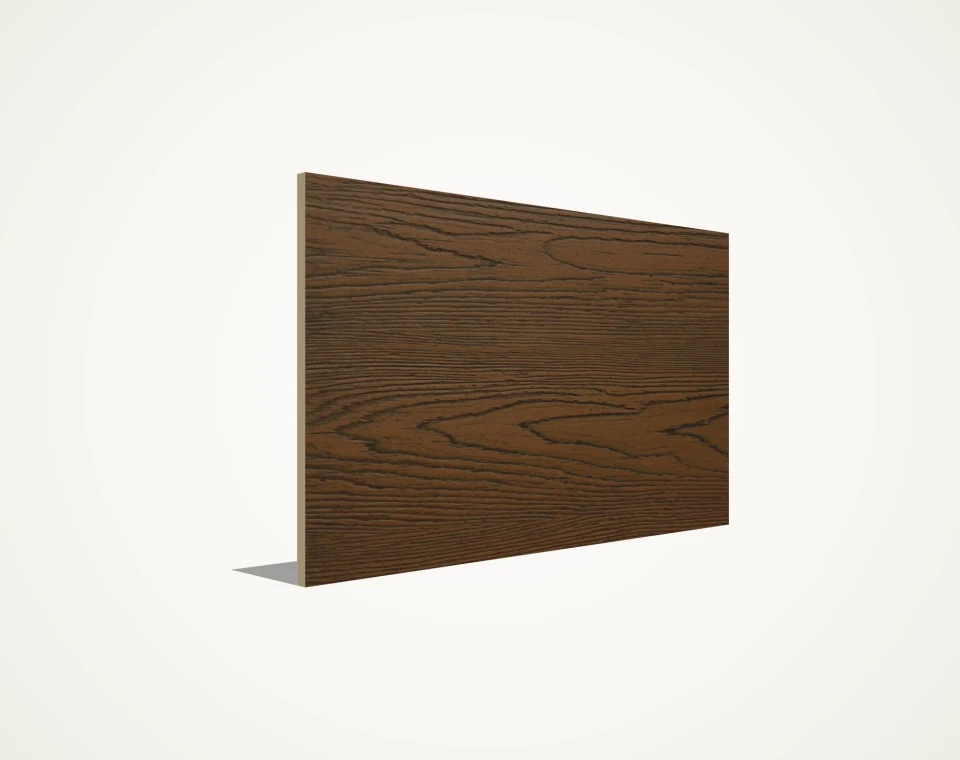
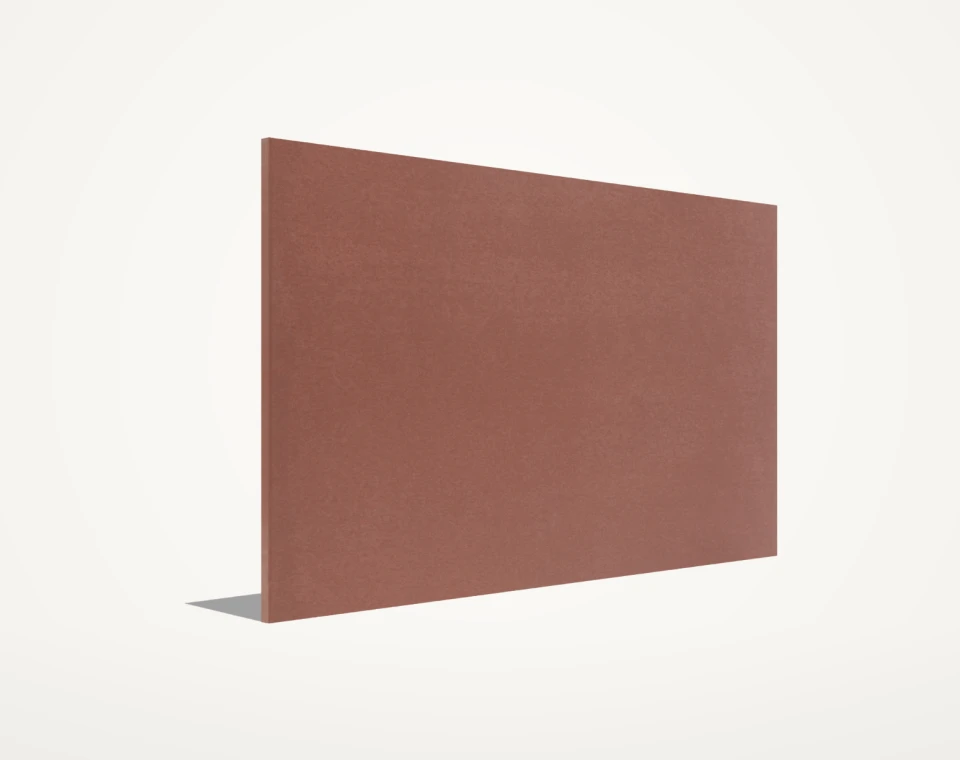
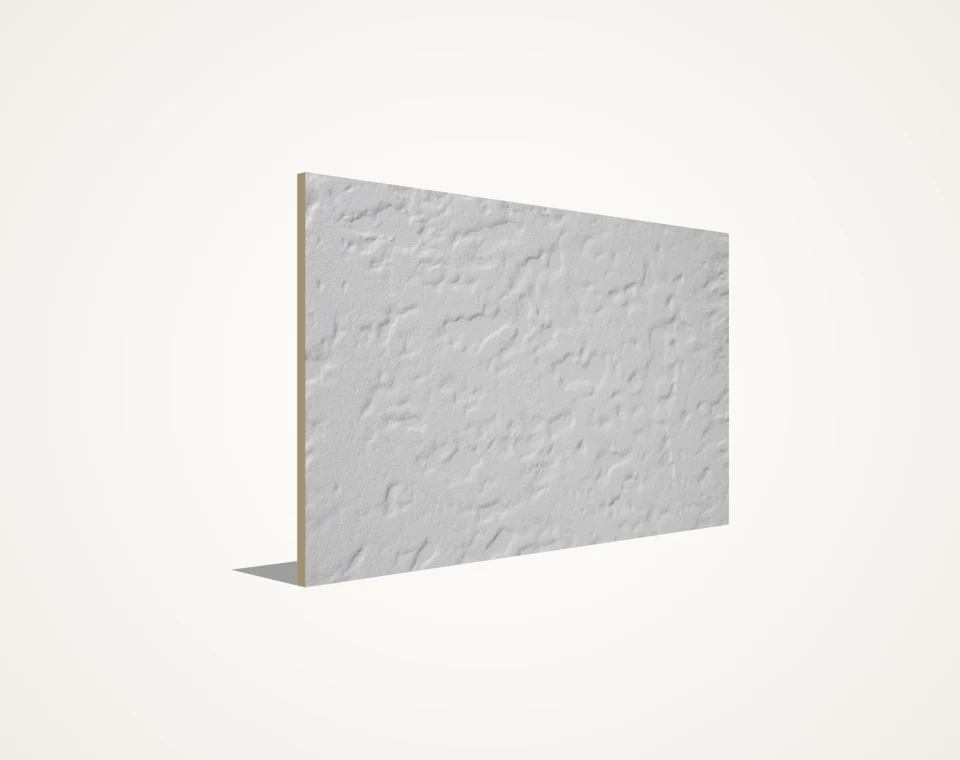
Representative surface & application visual — final shade, relief depth, and batch texture are verified via physical sample prior to order.
01Why Calibrated Monitors Cannot Reproduce Mineral Facade Surfaces
Even high-resolution architectural visualisations emit backlit RGB light, whereas a mineral fibre cement board reflects and scatters ambient daylight across microscopic cement pores, cellulose/synthetic matrix fibres, matt acrylic coatings or embossed reliefs. On screen, a subtle chalky concrete grey (SF-CB-SMOOTH) can appear flat and metallic, while a deep cedar grain (SF-WOOD) can look artificially contrasted.
Approving facade colours solely from PDF brochures or smartphone photos creates avoidable disputes when twenty pallets arrive on site. Requesting physical hand samples early in design ensures client, architect and facade contractor sign off on the exact tactile reality.
Never treat digital swatches in online libraries as final colour-matching standards.
Request raw AND coated samples side by side if comparing in-house painting vs. factory finishing.
Check tactile roughness by hand whenever panels will be installed at pedestrian eye and shoulder height.
02Stand Samples Vertically Outdoors Under Three Daylight Conditions
Architects frequently lay hand samples flat on a conference table under warm 2700–3000K indoor spotlights—an angle and spectrum the building facade will never experience. Because vertical walls receive sky dome reflection rather than overhead lamp glare, laying a sample flat makes dark anthracites look lighter and glossier than they appear on an upright elevation.
Hold every shortlisted sample vertically outdoors beside your actual aluminium window profile, brick plinth or render mock-up, and inspect it across three lighting states: direct midday sun, diffuse overcast sky, and low-angle grazing sunlight striking parallel to the face.
Grazing light is essential on SF-STONE, SF-WOOD and SF-LINEAR to judge real shadow contrast.
Rotate textured samples 90° (vertical vs. horizontal ribs/grain) to see how rain and sun interact with the relief.
For interior cladding projects, repeat the vertical test under the exact LED fixture specified for the room.
03Examine the Cut Edge Cross-Section: Coated vs. Through-Coloured
Turn the sample 90 degrees and inspect its 8 mm, 10 mm or 12 mm cut edge carefully. On a factory surface-coated panel (SF-COLOR over a standard core), opaque exterior paint covers the front face while the internal mineral matrix remains natural grey or off-white. On a through-coloured board, mineral pigments run all the way through the core.
Neither construction is universally “better”, but each creates a distinct architectural joint read. In 8–12 mm open ventilated facade joints or unframed external corners, an unpainted grey edge creates a crisp pale frame around dark panels unless edge-tinting or through-coloured boards are specified.
Check whether factory edges on the sample are raw, squared or sealed with colour-matched edge coating.
Evaluate how face-fixing rivet heads or countersunk screws will interact with the core and topcoat.
Confirm site-cut edge impregnation requirements in the product installation guide before fabrication.
04Account for Small-Sample Scale vs. Full 1250 × 2500 mm Elevations
A 150 × 200 mm or A4 hand sample represents less than two percent of a 1250 × 2500 mm (3.125 m²) or 1250 × 3000 mm (3.75 m²) facade sheet. On natural mineral concrete-look panels (SF-CB-SMOOTH), organic curing clouds, subtle fibre flecks and gentle shade shifts unfold across full boards rather than fitting inside one palm-sized square.
Likewise, stone (SF-STONE) and brick-effect (SF-BRICK) reliefs follow multi-course mould repeats. Reviewing full-board photographs alongside your physical hand sample—and ordering cohesive facade elevations in a single batch—ensures realistic visual expectations.
Request two samples or range pieces when evaluating naturally variegated mineral concrete looks.
Check mortar-joint width and course step height on SF-BRICK and SF-STONE full-sheet drawings.
Confirm batch-grouping strategy with SerFibro before splitting orders across separate purchase phases.
05Inspect Rear-Face Sealing, Wetting Darkening and Cleanability
Flip the sample over: ventilated facade panels often feature a calibrated rear-face seal or back-coating designed to balance vapour and moisture uptake between the weather face and the ventilated cavity side. Knowing the exact rear-face state matters whenever panels are fixed with structural adhesives or exposed inside open soffits and balconies.
Place a few drops of clean water onto unpainted or matt hydrophobed mineral samples: uncoated mineral cement naturally darkens temporarily when wet and returns to its original light tone as it dries, whereas film-forming acrylic coatings (SF-COLOR) bead water without shifting shade.
Test dry cloth and mild soap wipe-off on interior cladding candidates before specifying them in lobbies.
Never scratch or acid-wash coated samples with abrasive pads prohibited by the manufacturer care guide.
Keep reference samples stored dry indoors so cement efflorescence from wet plastic bags does not distort colour.
06Lock Approved Sample Codes and Matching TDS into Your Enquiry
Once the design team selects a preferred finish, write the complete variant identity directly onto the sample label and into your tender schedule: SerFibro family (SF-*), texture code (TX-*), delivery surface/core state, nominal thickness (mm) and full-sheet dimensions (mm), paired with the exact version of the product’s Technical Data Sheet (TDS).
Retaining one signed reference piece in the architect’s office and referencing the identical code when submitting your quantity schedule via WhatsApp (+90 505 507 04 18) or [email protected] ensures seamless continuity from material board to export pallet.
Keep approved physical samples protected from construction dust until final facade handover.
Verify MOQ and preparation lead time before locking custom non-standard colour matches into tenders.
Remember that sample approval covers board appearance only; fixing engineering remains a separate contractor scope.
Autoclaved 1250 × 2500 × 10 mm mass-pigmented flat facade board (EN 12467+A2 Cat. A, Class A1, RL ≥ 0.75) requiring zero site painting across 7 core shades and 5 solution topcoats.
Deeply moulded slate, split-stone and layered rock relief boards in 10–12 mm thicknesses for plinths, prefab villas and ventilated commercial elevations.
Frequently Asked Technical & Commercial Questions
How do I request physical fibre cement hand samples from SerFibro?
Select your shortlisted SF-* series and TX-* surface codes, then submit our Sample Request form to connect via WhatsApp (+90 505 507 04 18) or email [email protected] with your company/studio address and project application. Sample availability and courier terms are confirmed per request.
Will full-size delivered facade panels match a small hand sample 100% identically?
Factory-coated opaque colours follow controlled industrial tolerances, whereas raw or through-coloured mineral concrete-look boards naturally exhibit subtle cement-matrix tonal variation across full sheets and production batches. Ordering an entire elevation in one batch minimizes batch-to-batch drift.
Why does a wood-textured sample (SF-WOOD) arrive in raw grey unless a coated finish is requested?
Because wood-grain embossing (TX-WD-*) describes the physical 3D surface relief pressed into the fibre cement board, which can be supplied either raw/primed for site or factory staining, or factory-coated in wood tones. Always specify both relief code and coating state.
Can we send our own competitor or architectural colour chip to SerFibro for matching?
Yes, you can share a target RAL/NCS code or physical reference chip once project quantity is known. Custom colour matching is subject to supplier feasibility, minimum production batch volume, lead time and mutual sign-off on a physical counter-sample.
Should we test fasteners, drilling or adhesives directly on hand samples?
Hand samples are intended primarily for visual, tactile and cross-section review. Structural fixing pull-out values, adhesive qualification and edge-clearance layouts must follow full-scale system testing and the product’s official Technical Data Sheet and installation manual.
Ready to Verify Formats, Finishes & Export Delivery Terms?
Share your target board thickness, outer dimensions, finish state, and destination port. Our commercial office prepares a product-matched quotation and sample dispatch plan.